
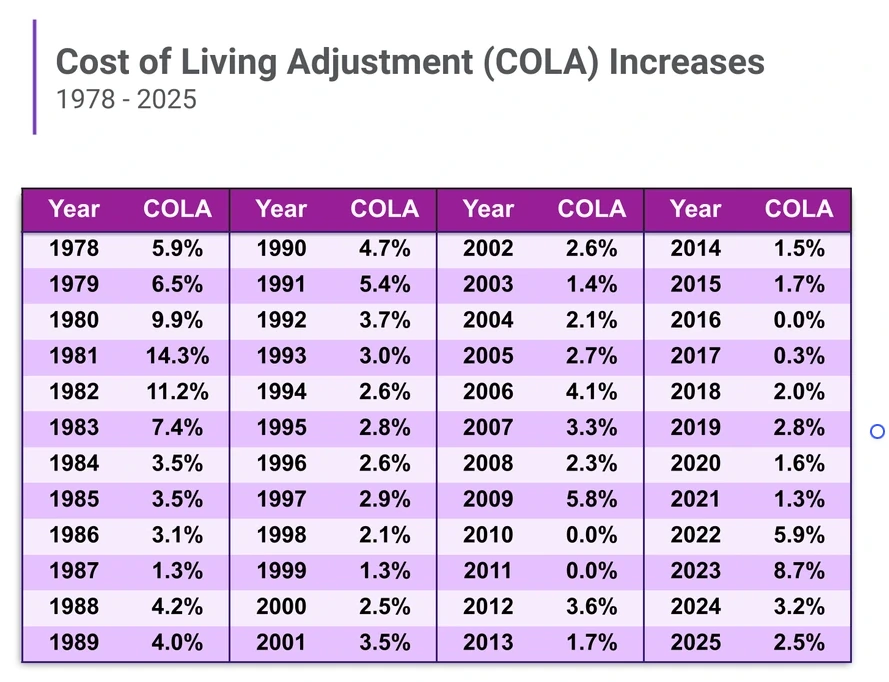
Social Security recipients could receive a cost-of-living adjustment (COLA) of 3.5% to 3.6% in 2027, according to forecasts released on September 11, 2026. The projected increase would exceed the 2.8% adjustment applied to benefits this year, potentially adding approximately $68 to $75 to an average monthly payment, depending on the benefit figure used.
The Social Security Administration (SSA) has not announced the official 2027 COLA. The final percentage is expected on October 14, following the release of September inflation data.
For retirees, people receiving disability benefits, and Supplemental Security Income (SSI) recipients, the adjustment will determine how much federal benefits increase next year. However, higher payments may provide limited relief if everyday expenses and Medicare premiums continue rising.
Here is what the latest projections mean for monthly checks, how the adjustment is calculated, and when beneficiaries can expect their new payment amounts.
Latest Social Security 2027 COLA Forecast
Two organizations tracking retirement benefits released updated estimates after the August inflation report became available on September 11.
The Senior Citizens League projects a 3.5% increase for 2027, down from its previous estimate of 3.6%.
AARP forecasts a slightly higher adjustment of 3.6%, reflecting its analysis of inflation trends and economic conditions.
Both predictions exceed the 2.8% COLA implemented for 2026.
| Organization | 2027 COLA forecast | Estimated monthly increase |
| The Senior Citizens League | 3.5% | $67.90 |
| AARP | 3.6% | Approximately $75 |
The estimated dollar increases differ partly because the organizations use different reference benefit amounts.
The Senior Citizens League calculates its projected increase using a monthly benefit of $1,940.08. AARP’s estimate reflects a higher average retired-worker benefit.
Neither projection represents a guaranteed payment increase.
The final adjustment depends on September’s Consumer Price Index for Urban Wage Earners and Clerical Workers (CPI-W), which was unavailable when the forecasts were published.
A single month’s inflation data can still change the final percentage.
How Much Will Social Security Checks Increase in 2027?
The amount beneficiaries receive depends on their existing Social Security benefit.
COLA is a percentage adjustment rather than a fixed dollar increase. Someone receiving $2,500 monthly will generally receive a larger dollar increase than someone receiving $1,200, even though both benefits are adjusted by the same percentage.
Using the current forecasts, the potential increases would look like this:
| Current monthly benefit | With 3.5% COLA | With 3.6% COLA |
| $1,000 | $1,035 | $1,036 |
| $1,500 | $1,552.50 | $1,554 |
| $2,000 | $2,070 | $2,072 |
| $2,500 | $2,587.50 | $2,590 |
| $3,000 | $3,105 | $3,108 |
These figures are illustrative calculations based on the two forecasts, not official 2027 benefit amounts.
Actual payments may differ because of SSA rounding procedures, Medicare deductions, tax withholding, and other applicable adjustments.
For a retiree currently receiving $2,000 per month, a 3.5% increase would add $70 before deductions.
That represents approximately $840 in additional annual benefits if the adjusted monthly amount remains unchanged throughout the year.
A 3.6% increase would add $72 per month, or approximately $864 annually.
The difference between the two forecasts is relatively small for an individual recipient. The more important figure for household budgeting will be the final payment amount after deductions.
When Will the Official 2027 COLA Be Announced?
The official Social Security COLA announcement is expected on Wednesday, October 14, 2026.
The Bureau of Labor Statistics has scheduled the September Consumer Price Index report for 8:30 a.m. Eastern Time that day.
September’s inflation figures will complete the three-month period used to calculate the annual adjustment.
Once the data becomes available, the Social Security Administration can determine the final COLA under the formula established by federal law.
The expected timeline is:
| Date | Expected development |
| September 11, 2026 | August inflation figures and updated forecasts released |
| October 14, 2026 | September inflation report and expected official COLA announcement |
| December 2026 | Individual benefit notices generally become available |
| January 2027 | Increased Social Security benefits begin |
The adjustment applies automatically to eligible benefits.
Recipients do not need to submit an application to receive the annual COLA.
Individual benefit notices are generally issued in December, allowing recipients to see their updated amounts before January payments begin.
How Is the Social Security COLA Calculated?
The Social Security Administration calculates COLA using the Consumer Price Index for Urban Wage Earners and Clerical Workers.
This measure tracks changes in prices for a basket of consumer goods and services.
The calculation compares the average CPI-W for July, August, and September of the current year with the corresponding average from the previous year in which a COLA was determined.
For the 2027 adjustment, the relevant comparison is between the third quarters of 2026 and 2025.
The percentage increase is rounded to the nearest tenth of one percent.
If the calculation produces no qualifying increase, benefits do not receive a COLA for that year.
The method is established by law. Forecasting organizations can estimate the outcome, but they cannot determine the official adjustment themselves.
Why August Inflation Matters
The August 2026 inflation report showed that the CPI-W had risen 3.5% over the preceding 12 months.
The broader Consumer Price Index for All Urban Consumers (CPI-U) increased 3.4% over the same period.
These are different inflation measures.
Although the broader CPI-U receives considerable attention in economic reporting, Social Security’s annual adjustment uses CPI-W.
The August CPI-W figure helps explain why forecasts currently cluster around 3.5% to 3.6%.
However, the final calculation uses the average index levels across all three months of the third quarter. September’s reading remains necessary before an official percentage can be established.
Why a Larger COLA May Not Improve Purchasing Power
An increase in Social Security benefits does not necessarily mean retirees will have more money available after covering essential expenses.

COLA is designed to compensate for inflation that has already occurred.
If prices rise substantially, a larger adjustment may simply help beneficiaries recover part of the purchasing power lost during the preceding year.
Housing, groceries, utilities, transportation, and medical care can place different pressures on individual households.
The CPI-W reflects spending patterns among urban wage earners and clerical workers. Those patterns do not necessarily match the expenses of older Americans.
Healthcare spending is a particular concern for many retirees.
Medicare Part B premiums are commonly deducted directly from Social Security payments. If premiums rise in 2027, they could absorb a portion of the COLA increase.
For example, a retiree receiving an additional $70 in monthly benefits would see a smaller improvement in their deposited payment if Medicare deductions also increased.
The final impact cannot be determined until the relevant 2027 Medicare premiums and individual benefit amounts are available.
Beneficiaries should distinguish between their gross Social Security benefit and the amount deposited into their bank account.
When Will Recipients Get Their Higher Payments?
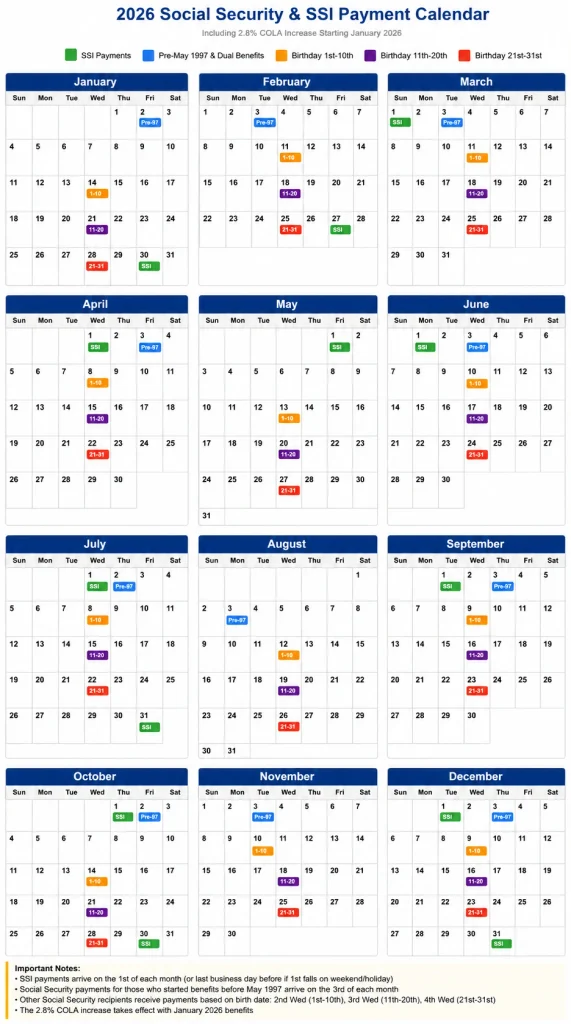
The 2027 COLA will generally appear in Social Security payments received in January 2027.
Recipients of retirement, survivors, and disability benefits normally receive payments according to the SSA’s established payment schedule.
For most beneficiaries, payment dates depend on their birthdays.
People who began receiving benefits before May 1997 and certain recipients receiving both Social Security and SSI follow different scheduling rules.
SSI payments have a separate schedule.
Because January 1 is a federal holiday, the January 2027 SSI payment is expected to be issued at the end of December 2026 under the usual holiday scheduling rules.
The exact payment date should be confirmed against the SSA’s official payment calendar.
What Beneficiaries Should Check Next
The September inflation report is the final missing component in the 2027 COLA calculation.
Until the October 14 announcement, the projected 3.5% to 3.6% increase should be treated as an estimate.
Recipients can prepare by reviewing their current monthly benefit and calculating a provisional increase using the forecast percentage.
Once the official adjustment is announced, the next step is to check the individual benefit notice and compare the new gross benefit with any Medicare deductions.
The amount that reaches a recipient’s bank account will ultimately provide the clearest picture of how much additional income will be available in 2027.